Korean J Anesthesiol Search

CLOSE


Age-dependent electroencephalogram alterations under remimazolam anesthesia
Jayyoung Bae, Myung Il Bae, Dong Woo Han, Jaehyun Kwon, Young Song
Korean J Anesthesiol. 2026;79(3):318-331.

Statistical Round

March 25, 2026


Correcting what cannot be corrected: rethinking publication bias analysis methods in clinical meta-analyses
Hyun Kang
Korean J Anesthesiol. 2026;79(3):271-290.

Clinical Research Article

March 24, 2026


Age-dependent electroencephalogram alterations under remimazolam anesthesia
Jayyoung Bae, Myung Il Bae, Dong Woo Han, Jaehyun Kwon, Young Song
Korean J Anesthesiol. 2026;79(3):318-331.

Clinical Research Article

February 3, 2026


Comparison of large language models and conventional machine learning in postoperative outcome prediction: a retrospective, multi-national development and validation study
Jipyeong Lee, Hyeonsik Kim, Luke Kim, Leerang Lim, Hyung-Chul Lee, et al.
Korean J Anesthesiol. 2026;79(3):332-352.

Clinical Research Article

June 26, 2025


Accuracy of ultrasound-measured skin-to-hyoid bone distance for predicting difficult mask ventilation in patients with obesity: a prospective observational study
Maha Mostafa, Israa ElGeneidi, Ahmed Hasanin, Mostafa Ali, Hanan Mostafa, et al.
Korean J Anesthesiol. 2026;79(3):353-359.

Clinical Research Article

April 6, 2026


Effect of ultrasound-guided superior laryngeal nerve block on tracheal tube-related responses during postoperative recovery in craniotomy patients: a randomized controlled trial
Jie Xiao, Tao Zhu, Renqing Liu, Shudong Wang, Fang Kang
Korean J Anesthesiol. 2026;79(3):360-369.

Editorials
Rethinking publication bias: from mechanical correction to sensitivity-based interpretation
Sangseok Lee
Korean J Anesthesiol. 2026;79(3):253-254.   Published online May 6, 2026
Age-dependent frontal EEG changes under remimazolam: reconsidering EEG monitoring interpretation
Bon-Wook Koo
Korean J Anesthesiol. 2026;79(3):255-256.   Published online May 14, 2026
Large language models for predicting postoperative complications: benefits, potential, and limitations of clinical use
Young-Suk Kwon
Korean J Anesthesiol. 2026;79(3):257-258.   Published online May 11, 2026
Clinical value of ultrasound-based skin-to-hyoid measurement in obese patients
Yoon Ji Choi
Korean J Anesthesiol. 2026;79(3):259-261.   Published online May 11, 2026
Smoother emergence after craniotomy: regional airway blockade as an alternative
Seongheon Lee
Korean J Anesthesiol. 2026;79(3):262-263.   Published online May 11, 2026
Narrative Review
Inhalational versus total intravenous anesthesia in noncardiac surgery: a comparative review of clinical outcomes
Ah Ran Oh, Jungchan Park
Korean J Anesthesiol. 2026;79(3):264-270.   Published online December 2, 2025
Inhalational anesthetics have long been the cornerstone of general anesthesia in noncardiac surgery owing to their reliable pharmacokinetics, ease of administration, and cardiopulmonary benefits such as bronchodilation and myocardial preconditioning. Total intravenous anesthesia (TIVA), achieved using short-acting agents such as propofol and remifentanil, and supported by target-controlled infusion systems and depth-of-anesthesia monitors, has emerged as a widely adopted alternative. TIVA is associated with improved recovery profiles, reduced incidence of postoperative nausea and vomiting, and potential neuroprotective and immunomodulatory effects. In this review, we compared the pharmacological mechanisms and clinical implications of inhalational anesthesia and TIVA, focusing on myocardial injury after noncardiac surgery and other perioperative outcomes. We summarized evidence from randomized controlled trials, large-scale observational studies, and health system-level analyses across multiple outcome domains: all-cause mortality, cardiovascular complications, pulmonary and renal outcomes, oncological prognosis, and system-level factors, such as cost-effectiveness and environmental impact. While inhalational agents demonstrated advantages in terms of cardioprotection and airway management, TIVA was found to offer potential benefits in select populations, particularly in cancer surgery and neuroanesthesia. No single technique demonstrated consistent superiority across all clinical contexts. Therefore, the selection of anesthetic technique should be personalized based on surgical risk, patient comorbidities, institutional infrastructure, and clinician expertise. Emerging trends in sustainability and precision medicine further underscore the need for individualized evidence-based strategies. By combining mechanistic insights with evidence from clinical practice, this review aimed to provide a balanced framework to guide optimal anesthetic decision-making in noncardiac surgery.
Statistical Round
Correcting what cannot be corrected: rethinking publication bias analysis methods in clinical meta-analyses
Hyun Kang
Korean J Anesthesiol. 2026;79(3):271-290.   Published online March 25, 2026
Methods to assess and adjust for publication bias are often presented as tools to correct distorted evidence in meta-analyses. However, statistical adjustment cannot recover information that was selectively generated, reported, or disseminated. Clinical evidence syntheses frequently rely on small or selective sets of trials and are characterized by substantial heterogeneity, multiple outcomes and time points, and complex dissemination pathways. Publication bias analysis methods are thus prone to over-interpretation and may yield conflicting conclusions. Therefore, they should be understood as an inferential process that links detection, model-based adjustment, and interpretation under explicit and unverifiable assumptions. We review classical methods to detect publication bias, including funnel plots, tests of small-study effects, and P-value-based approaches, and demonstrate their essential role as stress tests of model adequacy rather than as definitive detectors of publication bias. We then examine widely used methods to adjust for publication bias, such as trim-and-fill, selection models, regression-based approaches relating the effect size to study precision, and the Bayesian approach, clarifying their key assumptions and typical failure modes. Using a worked example, we illustrate how applying different publication bias adjustment methods to the same evidence base can yield divergent adjusted effects, emphasizing their assumption dependence. We additionally identify common misuses, propose a framework for evaluations, and discuss emerging challenges related to preprints, umbrella reviews, and AI-assisted evidence synthesis. This review thus aims to help align the strength of clinical conclusions with the robustness or fragility of the underlying data, with direct implications for authors, reviewers, and editors.
Scoping Review
Artificial intelligence in intensive care units: a scoping review addressing the translational gap to clinical practice
Francesco Zarantonello, Alessandro De Cassai, Tommaso Pettenuzzo, Nicolò Sella, Giulia Mormando, Annalisa Bolzon, Giulia Aviani Fulvio, Carlo Alberto Bertoncello, Annalisa Boscolo
Korean J Anesthesiol. 2026;79(3):291-305.   Published online March 31, 2026
Background
Critically ill patients generate large volumes of complex data, creating challenges for timely clinical decision making in intensive care units (ICUs). Artificial intelligence (AI) has emerged as a promising tool for supporting diagnosis, monitoring, prognostication, and workflow optimization in this setting. This scoping review aimed to map current AI applications in critical care and identify practical clinical applications.
Methods
A systematic search of the MEDLINE, Scopus, and EMBASE databases was conducted for studies published between January 2015 and June 2025. Eligible studies evaluated practical AI applications in ICU settings involving patients, relatives, or healthcare professionals. Data pertaining to study design, AI techniques, clinical domains, outcomes, model characteristics, and implementation features were extracted.
Results
In total, 112 studies were included. Most were retrospective observational studies (59.8%) focusing on adult populations. Machine learning was the predominant technology used (76.8%), and the main clinical applications were outcome and mortality predictions, early warning systems, and monitoring, particularly in neurological and respiratory domains. Notably, 24.1% of included studies relied on North American public databases, raising concerns about geographic data monoculture, and only 27.7% of the systems provided real-time bedside applications. Most systems remained at the experimental stage, with limited real-world implementation, heterogeneous performance reporting, and a frequent lack of external validation.
Conclusions
AI applications in ICUs have expanded rapidly and show substantial promise for improving patient care and workflow efficiency. Future research should prioritize prospective multicenter validation, explainability, and implementation science to ensure the safe and effective integration of AI into critical care.
Systematic Review
Hemodynamic stability with remimazolam versus propofol during anesthesia induction in hypertensive patients: a meta-analysis with trial sequential analysis of randomized controlled trials
Seung Eun Song, Sang Hun Kim, Seongtae Jeong, Hyun Kang, Hyun Jung Kim
Korean J Anesthesiol. 2026;79(3):306-317.   Published online April 1, 2026
Background
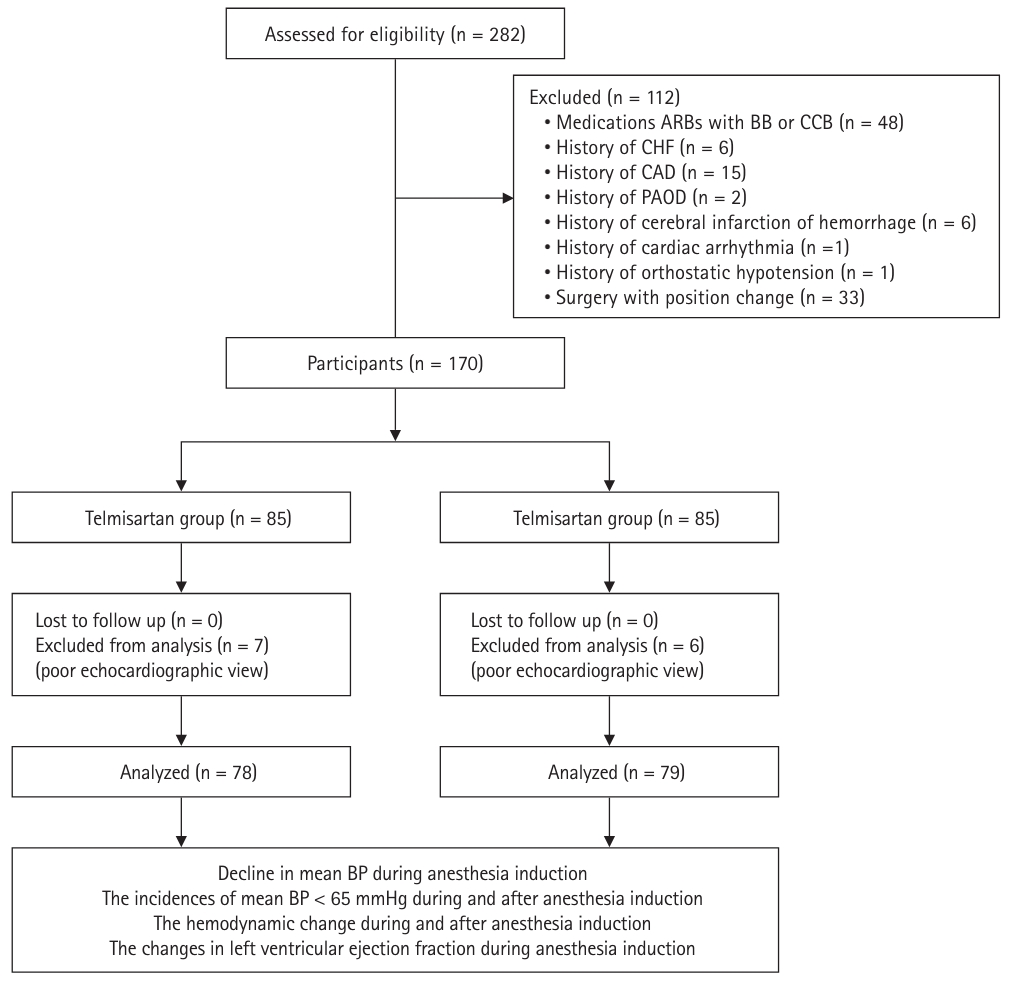
Hypertensive patients tend to have an increased risk of hypotension during anesthesia induction, which can result in adverse outcomes. This study aimed to compare hemodynamic stability with remimazolam versus propofol in hypertensive patients.
Methods
This meta-analysis analyzed randomized controlled trials investigating the hemodynamic outcomes of remimazolam versus propofol during anesthesia induction in hypertensive adults. A systematic search of electronic databases was conducted in November 2024.
Results
Six studies were included in the final analysis. The administration of remimazolam significantly lowered the risk of hypotension (risk ratio [RR] = 0.711, 95% CI [0.545–0.929], I2 = 67.54%) and bradycardia (RR = 0.256, 95% CI [0.101–0.649], I2 = 0.0%). It also resulted in a higher minimum mean arterial pressure (mean difference [MD] = 9.023 mmHg, 95% CI [0.243–17.802], I2 = 97.50%) and higher minimum heart rate (MD = 7.200 beats/min, 95% CI [1.960–12.441], I2 = 86.40%). The trial sequential analysis revealed that none of the outcomes reached the required information size.
Conclusions
The administration of remimazolam showed a trend toward superior hemodynamic stability compared with propofol during anesthesia induction in hypertensive patients, especially in minimizing the incidence of hypotension and bradycardia. However, the trial sequential analysis results remain inconclusive, the current evidence is limited by small sample sizes, and larger trials are needed to confirm our findings.
Clinical Research Articles
Age-dependent electroencephalogram alterations under remimazolam anesthesia
Jayyoung Bae, Myung Il Bae, Dong Woo Han, Jaehyun Kwon, Young Song
Korean J Anesthesiol. 2026;79(3):318-331.   Published online March 24, 2026
Background
Remimazolam is a novel benzodiazepine anesthetic increasingly used for total intravenous anesthesia (TIVA); however, its electroencephalographic signatures—especially in elderly patients—remain poorly characterized. This study aimed to evaluate the relationship between age and intraoperative electroencephalogram (EEG) dynamics during remimazolam-based TIVA.
Methods
This prospective observational study analyzed EEG recordings from 69 adult patients receiving remimazolam-based TIVA. We conducted linear regression and Pearson correlation analyses to assess the correlation between age and intraoperative EEG components, including absolute and relative power of EEG frequency bands, frontal coherence, aperiodic components, burst suppression ratio, patient state index (PSI), and spectral edge frequency.
Results
Absolute alpha (r = −0.412, P < 0.001), beta (r = −0.459, P < 0.001), and gamma power (r = −0.372, P = 0.002) decreased with age. Conversely, relative delta (r = 0.297, P = 0.013) and theta power (r = 0.433, P < 0.001) increased with age, whereas relative alpha (r = −0.354, P = 0.003) and beta power (r = −0.266, P = 0.027) decreased with age. Frontal coherence of delta (r = −0.436, P < 0.001), theta (r = −0.279, P = 0.02), alpha (r = −0.269, P = 0.025), and beta (r = −0.27, P = 0.025) oscillations decreased with age.
Conclusions
Older patients exhibited decreased alpha and beta powers, increased delta and theta dominance, and decreased frontal coherence under remimazolam anesthesia guided by the PSI. These findings suggest age-specific alterations in cortical dynamics that may affect EEG monitoring during remimazolam anesthesia.
Comparison of large language models and conventional machine learning in postoperative outcome prediction: a retrospective, multi-national development and validation study
Jipyeong Lee, Hyeonsik Kim, Luke Kim, Leerang Lim, Hyung-Chul Lee, Hyeonhoon Lee
Korean J Anesthesiol. 2026;79(3):332-352.   Published online February 3, 2026
Background
Conventional machine learning (ML) models for predicting surgical outcomes have limitations in generalizability. We explored large language models (LLMs) as scalable alternatives to conventional ML models in predicting postoperative outcomes, including in-hospital 30-day mortality, intensive care unit (ICU) admission, and acute kidney injury (AKI).
Methods
This study utilized the Informative Surgical Patient for Innovative Research Environment (INSPIRE) dataset (n = 80 985) from South Korea for model development and internal validation, and the Medical Informatics Operating Room Vitals and Events Repository (MOVER) dataset (n = 6265) from the United States for external validation. The study compared three different LLMs—Generative Pre-trained Transformer [GPT]-4o, Llama-3-70B, and OpenBioLLM-70B—against MLs using various prompt engineering approaches. LLMs were evaluated with different model parameter quantizations (4-bit normalized floating point vs. 16-bit brain floating point).
Results
OpenBioLLM-70B was comparable to eXtreme Gradient Boosting (XGBoost) across all tasks (in-hospital 30-day mortality: area under receiver operating characteristic curve [AUROC] 0.782 [95% CI, 0.748–0.813] vs. 0.791 [95% CI, 0.753–0.825]; ICU admission: AUROC 0.595 [95% CI, 0.581–0.609] vs. 0.594 [95% CI, 0.580–0.608]; AKI: AUROC 0.830 [95% CI, 0.802–0.855] vs. 0.823 [95% CI, 0.792–0.851]) during external validation. Open-source LLMs maintained performance with 4-bit quantization, reducing computational requirements by 75%.
Conclusions
The findings support the versatility and efficiency of LLMs for clinical decision support through on-premises compatibility, addressing data privacy. Further validation with diverse datasets is needed to ensure their reliability and applicability across different perioperative settings.
Accuracy of ultrasound-measured skin-to-hyoid bone distance for predicting difficult mask ventilation in patients with obesity: a prospective observational study
Maha Mostafa, Israa ElGeneidi, Ahmed Hasanin, Mostafa Ali, Hanan Mostafa, Nader Noshy Naguib
Korean J Anesthesiol. 2026;79(3):353-359.   Published online June 26, 2025
Background
The risk of difficult mask ventilation (DMV) is high in patients with obesity. Therefore, we evaluated the accuracy of ultrasound-measured skin-to-hyoid bone distance (SHD) for predicting DMV in this population.
Methods
This prospective observational study included adult patients with obesity scheduled for elective surgery. Preoperative airway assessment included the modified Mallampati test, thyromental distance, sternomental distance, upper lip bite test, mouth opening, neck mobility, STOP-Bang score, and the SHD measured by a handheld ultrasound probe. The mask ventilation grade was evaluated using the 4-level Han score, and grades 3 and 4 were considered as DMV. The primary outcome was the ability of SHD to predict DMV using area under the receiver operating characteristic curve (AUC) analysis. A multivariate model including the STOP-Bang score, modified Mallampati test, upper lip bite test, and SHD was also assessed.
Results
Data from 326 patients were analyzed. The DMV incidence was 22/326 (6.7%). Patients with DMV were predominantly male and had higher weight, STOP-Bang score, modified Mallampati grade, upper lip bite class, and SHD than did those with easy mask ventilation. The AUC (95% CI) of the SHD for predicting DMV was 0.88 (0.84–0.92). An SHD > 1.9 cm had a positive-predictive value of 27%, while its negative-predictive value was 99% (for SHD ≤ 1.9 cm). Multivariate analysis revealed that the SHD was an independent predictor of DMV.
Conclusions
In patients with obesity, SHD measured by a handheld ultrasound probe is an independent predictor of DMV and can accurately predict DMV. An SHD ≤ 1.9 cm can exclude DMV with 99% accuracy.
Effect of ultrasound-guided superior laryngeal nerve block on tracheal tube-related responses during postoperative recovery in craniotomy patients: a randomized controlled trial
Jie Xiao, Tao Zhu, Renqing Liu, Shudong Wang, Fang Kang
Korean J Anesthesiol. 2026;79(3):360-369.   Published online April 6, 2026
Background
Coughing and hemodynamic fluctuations during emergence from anesthesia after a craniotomy can result in serious complications. This study evaluated whether the ultrasound-guided superior laryngeal nerve block (SLNB) attenuates these tracheal tube-related responses.
Methods
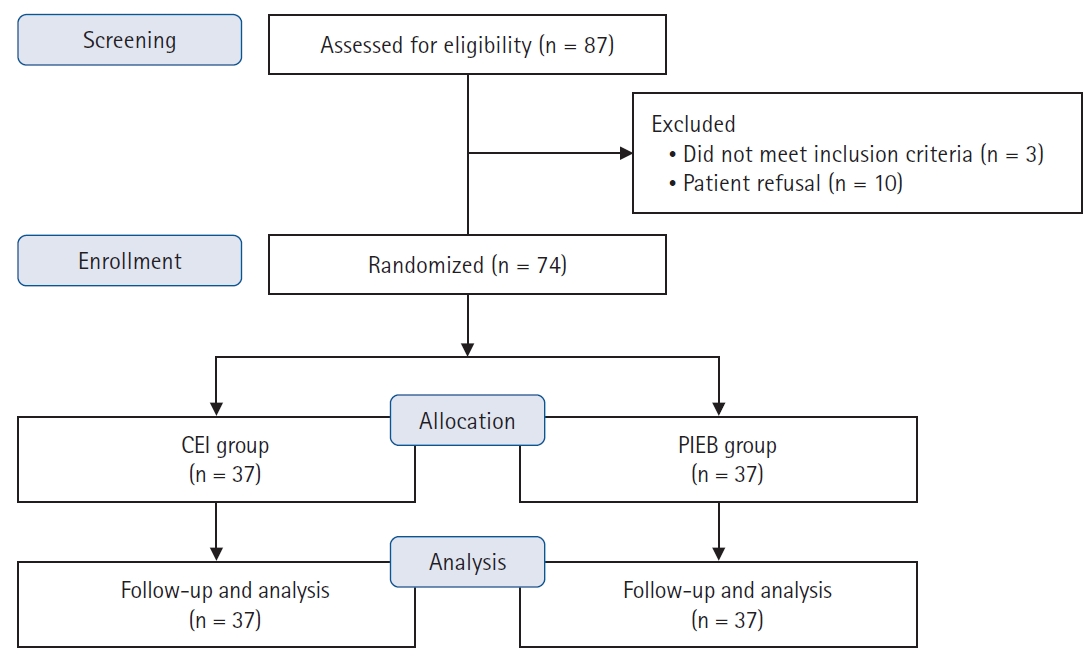
Eighty patients scheduled for elective craniotomy were randomized into the control (Group C, 2 ml 0.9% saline per side) and SLNB (Group S, 2 ml 1% lidocaine per side) group. The primary outcome was the incidence of coughing during the recovery period. Secondary outcomes included the severity of coughing, hemodynamic fluctuations, need for rescue interventions, anesthesia-related parameters, and complications.
Results
Compared to controls, the patients in Group S experienced a significantly reduced incidence (78.9% vs. 48.6%; P = 0.006) and severity (P < 0.001) of coughing during emergence. The mean arterial pressure and heart rate were also more stable during and after extubation in Group S than in Group C. Furthermore, Group S required a significantly lower dose of nicardipine during the emergence period (P = 0.032), and both the incidence of and visual analog scale scores for postoperative sore throat at 6 h after extubation were markedly reduced (P = 0.035). No significant differences were noted between the groups in terms of propofol consumption, emergence agitation, extubation time, post-anesthesia care unit stay duration, or complications.
Conclusions
The SLNB significantly suppressed extubation-related responses during anesthetic emergence after craniotomy by reducing coughing and attenuating hemodynamic fluctuations, thereby contributing to a smoother emergence profile.
Letter to the Editor
An electrical fire in the operating room: lessons from a real-world emergency
Ki Tae Jung
Korean J Anesthesiol. 2026;79(3):370-371.   Published online April 22, 2026
  • Journal Impact Factor 4.0
  • SCImago Journal & Country Rank
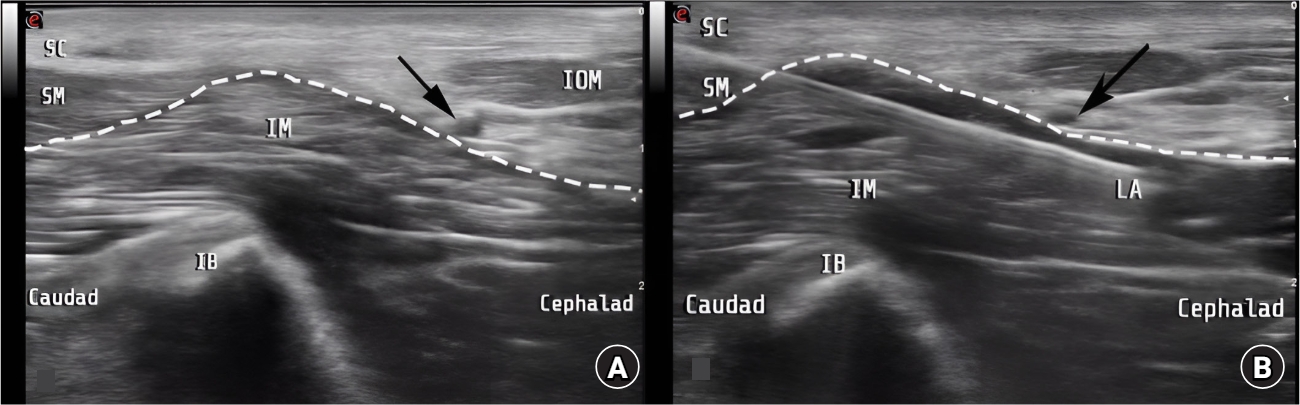
  • Axillary serratus anterior plane block as a novel approach to anesthetizing the intercostobrachial nerve for upper arm arteriovenous fistula creation surgery -three case reports-. Korean J Anesthesiol. 2025;78:279-284
Close layer
prev next

ABOUT
ARTICLE CATEGORY

Browse all articles >

BROWSE ARTICLES
AUTHOR INFORMATION
Editorial Office
101-3503, Lotte Castle President, 109 Mapo-daero, Mapo-gu, Seoul 04146, Korea
Tel: +82-2-792-5128    Fax: +82-2-792-4089    E-mail: journal@anesthesia.or.kr                
Business Name: Korean Society of Anesthesiologists
Business Registration: 106-82-07194
Representative: Young-Tae Jeon

Copyright © 2026 by Korean Society of Anesthesiologists.

Developed in M2PI

Close layer
prev next